The difference between a good plywood purchase and an expensive mistake is knowing what to check. Here's how to buy Saburi plywood the right way — where to get it, how to confirm it's genuine and BIS-certified, what documents to ask for, and how to compare honestly against other brands.
Where can I buy Saburi Ply products in India?
Quick answer
Saburi Ply products are available through authorised dealers across 26 states and 427+ districts. Contact your nearest dealer through the Saburi Ply website or regional sales team. Products are available in metros, Tier 2, and Tier 3 cities across India.
Saburi Ply's distribution network spans 26 states and 427+ districts and union territories, making it one of the most accessible branded plywood options across India. Authorised dealers carry the core Saburi Ply product range including Gold 710, Scout, Club H+, Modwud, and Endura WPC. Premium products like Titanium Plus and Perennial may require advance ordering through the dealer for delivery from the nearest manufacturing plant.
For metro cities — Kolkata, Mumbai, Delhi NCR, Bengaluru, Hyderabad, Chennai — multiple authorised dealers are typically accessible within proximity. For Tier 2 and Tier 3 cities, distributors ensure product availability across the core range. The Saburi Ply website provides regional contact details for dealer location assistance.
Should I always buy branded plywood over unbranded?
Quick answer
Always buy BIS-certified branded plywood — it carries a verifiable IS certification number (CM/L), documented warranty, and consistent quality standards. Unbranded plywood has no verifiable quality, no warranty, unknown formaldehyde levels, and creates long-term financial risk through material failure callbacks.
The financial case for branded IS-certified plywood is clear when callback cost is included in the total cost calculation. Unbranded BWP claims: approximately Rs.900-1,200 per sheet (18mm, 8x4ft); no IS:710 or IS:303 certification verifiable; no warranty documentation; unknown formaldehyde emission (potentially E2 in a kitchen environment); no recourse if material fails. Saburi Gold 710 IS:710: approximately Rs.1,600-1,900 per sheet; IS:710 BIS certification with verifiable CM/L number; 30-year manufacturer warranty; E1 certified emission; documented material accountability.
The price difference: Rs.400-700 per sheet. For a standard 3BHK kitchen requiring approximately 50 sheets of 18mm: total additional cost of branded IS:710 over unbranded claim is approximately Rs.20,000-35,000. The average cost of a single kitchen callback (swollen cabinets, delaminating shutters, termite damage): Rs.15,000-50,000 for repair, replacement, and re-installation.
One callback on an unbranded kitchen erases the cost saving of 3-4 projects. The long-term financial decision is unambiguous.
How do I know if Saburi plywood is genuine?
Quick answer
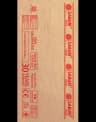
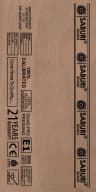
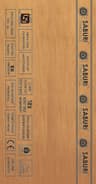
Check for: BIS ISI mark with CM/L number on the panel; Saburi Ply brand marking on the panel and packaging; verify the CM/L number on bis.gov.in. Genuine Saburi Ply products come with warranty documentation from the authorised dealer. Report suspected counterfeits to Saburi Ply's regional sales team.
Four-point verification for genuine Saburi Ply products: (1) ISI mark: genuine IS-certified Saburi plywood carries a printed BIS ISI mark on the panel face with a CM/L number. (2) Brand marking: Saburi Ply's name and product brand (e.g., Gold 710, Club H+) are printed directly on the panel face in a consistent format. (3) CM/L verification: enter the CM/L number at bis.gov.in — it should return Saburi Panel Private Limited as the certificate holder with the applicable IS standard and valid certification dates. (4) Dealer authorisation: purchase only from authorised dealers listed through Saburi Ply's website or confirmed by the regional sales team. If a product carries a Saburi brand name but the CM/L number does not verify at bis.gov.in, or if the dealer cannot provide a warranty card, do not purchase. Report suspected counterfeits to Saburi Ply directly through the regional contact.
Is Saburi Ply available in all Indian states?
Quick answer
Saburi Ply distributes across 26 states and 427+ districts in India. Coverage is strongest in West Bengal, Andhra Pradesh, Telangana, and major metro cities. Expansion into remaining states is ongoing. Contact the regional sales team to confirm availability in specific locations.
Saburi Ply's current distribution covers 26 states and union territories. Strongest coverage: West Bengal (home state, Kolkata plant, deepest dealer network), Andhra Pradesh and Telangana (Vizag plant serving directly), and major metro cities including Mumbai, Delhi NCR, Bengaluru, Hyderabad, and Chennai. Good coverage: Tamil Nadu, Karnataka, Kerala, Odisha, Jharkhand, Bihar, Uttar Pradesh, Maharashtra, Rajasthan, and Gujarat.
Expanding coverage: Northeast India, Himachal Pradesh, Uttarakhand, and remaining states. For any specific city or district enquiry, Saburi Ply's regional sales team can confirm nearest authorised dealer availability and expected supply timelines. The Vizag plant has significantly expanded South Indian reach.
National dealer network expansion is an active programme with new markets added regularly.
What should I tell my dealer when ordering Saburi plywood?
Quick answer
Specify: product name (e.g., Gold 710, Club H+, Scout BWP), thickness (4mm to 25mm), size (standard 8x4ft or large format 10x4ft), quantity (number of sheets), and application (for dealer to confirm grade suitability). Request the BIS CM/L number for IS-certified products.
Providing complete specifications to your Saburi Ply dealer ensures the correct product is supplied for your project requirements. Minimum information to specify: (1) Product name: Gold 710, Club H+, Perennial, Titanium Plus, Scout BWP/BWR/MR, FR Ply 40/60/120 minute, etc. (2) Thickness: 4mm, 6mm, 9mm, 12mm, 16mm, 18mm (most common), 19mm (block board), 25mm — specify exactly. (3) Format: standard 8x4ft or large format 10x4ft. (4) Quantity: number of sheets — your designer's BOQ provides this. (5) Timeline: installation date, so the dealer can confirm stock availability and supply scheduling. Additional useful information: (6) Application description — the dealer can verify grade suitability. (7) IS standard required (e.g., IS:710 for kitchen). (8) Warranty documentation requirement — request warranty card for warranty records.
Should I buy Saburi plywood directly from the manufacturer or through a dealer?
Quick answer
Saburi Ply sells through its authorised dealer and distributor network — not directly to individual buyers for standard retail quantities. Authorised dealers provide product availability, warranty documentation, and after-sales service. For large institutional or project bulk orders, the zonal sales team coordinates directly.
Saburi Ply's go-to-market model uses an authorised dealer network as the primary distribution channel for individual and small-to-medium scale buyers. Benefits of purchasing through authorised dealers: product warranty documentation (warranty cards, dealer stamp, purchase invoice for warranty claim purposes); assured product authenticity (authorised dealers source only from Saburi Ply's plants); local availability with reduced delivery lead times; immediate physical inspection of product before purchase; and ongoing dealer relationship for repeat supply across a project duration. For large institutional procurement (hospitals, hotel chains, government projects) and large contractor bulk orders (100+ sheets), Saburi Ply's regional zonal sales team engages directly to negotiate bulk pricing, production scheduling, and direct supply coordination from the appropriate manufacturing plant.
How do I compare Saburi plywood with competitor products when buying?
Quick answer
Compare on: (1) BIS IS standard certification (verify CM/L at bis.gov.in); (2) warranty terms (money-back vs standard replacement); (3) emission standard (E0 vs E1 vs E2); (4) timber core specification (Gurjan vs mixed hardwood); (5) additional certifications (CARB, FSC, IGBC). Ask for these in writing from any competitor.
Objective plywood comparison for purchase decisions should use five measurable criteria. (1) BIS certification: verify the CM/L number at bis.gov.in for any IS:710, IS:303, or IS:5509 product claim. Products failing this verification are not genuinely certified. (2) Warranty terms: ask for the warranty in writing with specific coverage terms. Distinguish between money-back (financial compensation) and standard product replacement warranties.
Saburi's 10x money-back on Titanium Plus and 5x on Club H+ are money-back commitments — significantly stronger than standard replacement warranties. (3) Emission standard: ask for the emission grade in writing (E2, E1, or E0) and request test report documentation. (4) Core specification: ask what timber species forms the core. Gurjan versus mixed hardwood produces measurably different density and structural performance. (5) Additional certifications: CARB, FSC, IGBC — ask for certificate numbers. If a competitor cannot provide verifiable documentation for any of these five criteria, treat their claims as marketing assertions without evidence.
What documents should I request when buying Saburi plywood?
Quick answer
Request: (1) purchase invoice with product name, grade, thickness, and date; (2) BIS CM/L number for IS-certified products; (3) Saburi Ply warranty card; (4) FSC and CARB certification copies for green building or export specification requirements. Keep all documents for warranty claim purposes.
Documentation best practice for plywood purchases protects both buyers and contractors against future disputes. The minimum documentation set: (1) Itemised purchase invoice: must specify product name (e.g., Saburi Gold 710), grade (IS:710 BWP), thickness (18mm), format (8x4ft), quantity, and total — this is the primary document for warranty claims. (2) BIS CM/L number: for any IS-certified product, the CM/L number enables independent verification at bis.gov.in. (3) Warranty documentation: Saburi Ply warranty card signed and stamped by the authorised dealer — confirming warranty coverage terms for the specific product. For architects and institutional buyers: (4) ISO certificate copy for quality management documentation. (5) CARB compliance certificate required for LEED submissions and institutional procurement. (6) FSC chain of custody certificate required for LEED Materials and Resources credit. (7) Product technical datasheet per IS standard.
Keep all documents in a project file until the furniture or installation reaches end of life — warranty claims can arise years after purchase.
How should I evaluate Saburi plywood versus competitors in a dealer visit?
Quick answer
At the dealer, verify: (1) ISI mark and CM/L number on the panel and check at bis.gov.in on your phone; (2) ask for the warranty card and read the specific coverage terms; (3) examine the cut edge for glue line colour (PF resin shows dark brown lines for BWP); (4) check calibration by running your hand across both faces for uniform thickness.
Evaluating plywood quality at the dealer before purchase requires both documentation verification and physical inspection. Documentation verification (takes 2-3 minutes): (1) Find the ISI mark and CM/L number printed on the panel face. Enter the CM/L number at bis.gov.in on your mobile — it returns the certificate holder name (should be Saburi Panel Private Limited), the IS standard (IS:710, IS:303, etc.), and certificate validity date. (2) Ask for and read the warranty card: confirm the coverage term (e.g., 30 years for Gold 710, lifetime for Club H+) and the nature of coverage (money-back versus replacement).
Physical inspection: (3) Examine the panel edge cross-section — genuine BWP plywood bonded with phenol-formaldehyde shows dark brown or dark red glue lines at each veneer interface. Light or white glue lines indicate melamine resin (BWR grade) or UF resin (MR grade) — not BWP. (4) Run your hand across both faces: calibrated plywood feels uniformly smooth with no ridges or thickness variation. Uncalibrated panels show surface irregularities. (5) Tap the panel — genuine uniform veneer construction produces a consistent sound; delaminated or poorly bonded panels produce hollow or variable sounds.
What should I look for when buying plywood at a hardware store?
Quick answer
At a hardware store, check: (1) ISI mark and CM/L number on the panel; (2) dark brown glue lines at panel edges (confirms PF resin for BWP); (3) uniform thickness when you run your hand across the face; (4) Saburi Ply brand name on the panel face; (5) ask for warranty card and verify CM/L number at bis.gov.in on your phone.
Five-point physical and documentation check for plywood quality at a hardware store: (1) ISI Mark and CM/L Number: genuine IS-certified plywood from Saburi Ply carries a printed ISI mark and CM/L number on the panel face. Enter the CM/L number at bis.gov.in on your phone — the result should show Saburi Panel Private Limited with the applicable IS standard (IS:710, IS:303, etc.) and a current (not expired) certificate date. (2) Edge cross-section colour: cut or examine the panel edge — genuine BWP plywood with phenol-formaldehyde resin shows dark brown or dark red glue lines between each veneer layer. Light yellow or white glue lines indicate melamine or UF resin — not genuine BWP grade. (3) Face uniformity: run your palm across both faces — calibrated plywood feels uniformly smooth; uncalibrated panels feel irregular with ridges or thickness variation. (4) Brand marking: Saburi Ply products carry the product brand name (Gold 710, Club H+, Scout, etc.) printed on the panel face. (5) Warranty card: request the warranty card from the dealer before purchase — without documentation there is no warranty recourse.
These five checks take under 5 minutes and protect a significant material investment.
Key takeaways
- Check the ISI mark and CM/L number on the panel itself, then verify it on bis.gov.in from your phone at the counter.
- Look at the cut edge: dark brown glue lines confirm the PF resin that makes a panel BWP.
- A warranty claim needs paperwork — ask for the invoice, the CM/L number and the warranty card before you leave.