How Plywood Strengthens Structures for Long-Lasting Performance
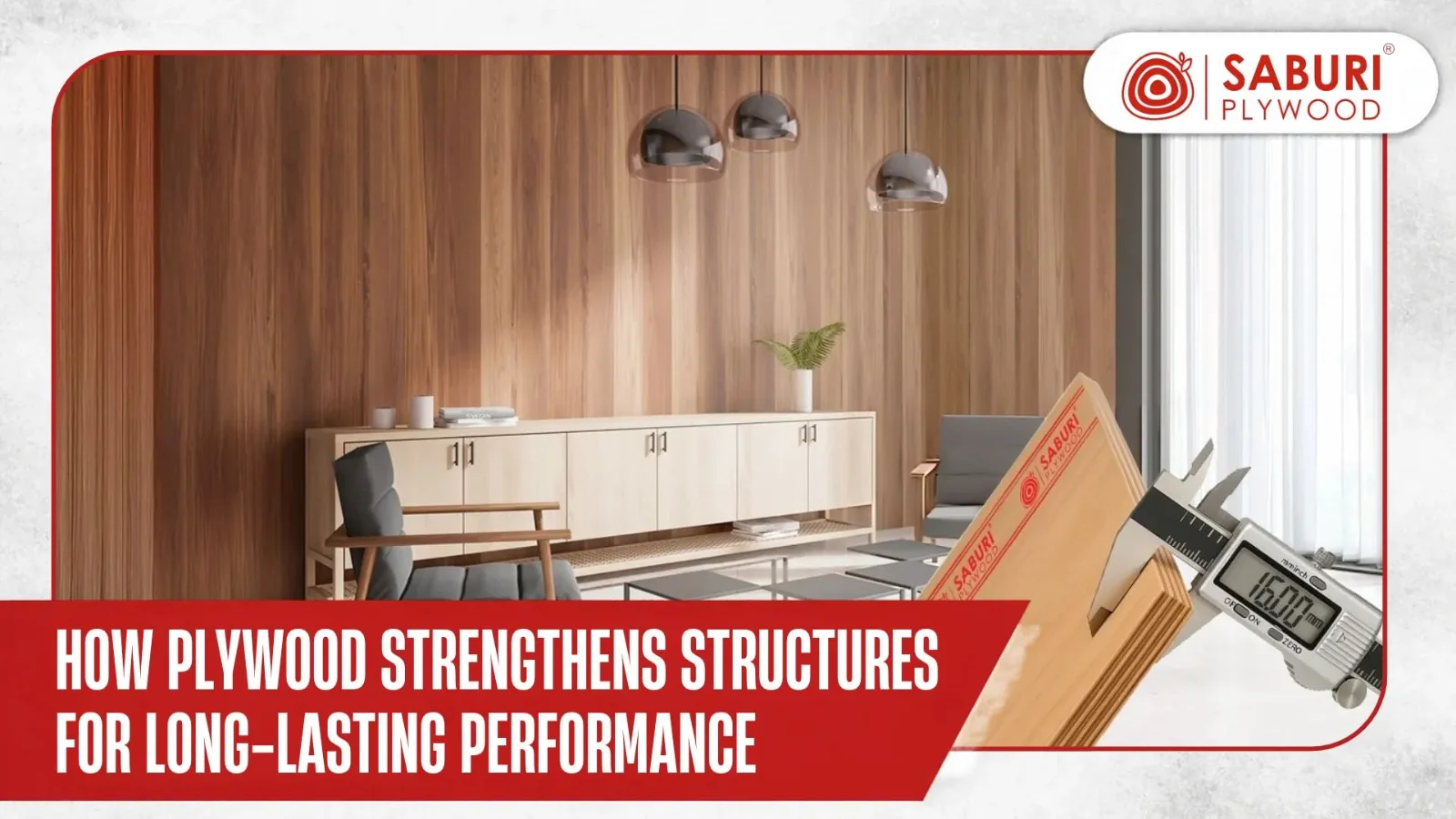
Wood in its natural state has its own mind; it shrinks, swells, and distorts with changes in weather conditions. However, plywood overcomes this problem through cross-graining by aligning thin sheets perpendicular to each other. Cross-graining makes it more resistant to warping, splitting, and twisting than natural wood. An expert plywood manufacturer in India ensures that every slice of plywood is firmly glued together into one sheet.
The even distribution of load over large surface areas makes plywood useful in ensuring strength in structures. It is durable against impact, water, and wear and tear and therefore can be used reliably in floors, walls, roofing, and furniture. The material ensures tight and long-lasting joints when used with nails and screws. High-quality plywood will ensure reliable and sturdy constructions that will last for a long time.
Various Ways Plywood Strengthens Structures for Long-Lasting Performance
Its structure gives plywood strength, stability, load-bearing capability, and longevity. This is because plywood does not warp or crack easily.
Cross-layered construction improves overall strength
Plywood consists of layers of thin wood pieces glued together in such a way that each successive layer is cut with grains in the opposite direction from its preceding layer. The effect is to distribute stress over the board rather than concentrating it in one direction only.
Provides consistent performance across different projects
In construction projects and even interior design projects, consistency is key. By using plywood that complies with recognized specifications for structural-grade plywood, professionals will have an easier time making material decisions. Having a dependable structural-grade plywood supplier in India can be of great use to buyers in choosing the appropriate materials.
Reduces bending and warping
Both fluctuations in temperature and humidity levels may influence wood over time. Since plywood is composed of multiple layers of wood, this factor minimizes the effect of such fluctuations on the plywood panels, which makes them more stable and flat. Such a property is important for big pieces of furniture.
Offers better resistance to moisture
Moisture may have detrimental effects on wood, alter its measurements, and cause failure in the adhesive bond. Structural plywood that is made using the appropriate grade of BWP phenolic resin adhesive has better resistance to moisture. Such plywood would be a good option for such tough environments.
Supports heavy-duty construction applications
Plywood is not confined to wardrobe units and kitchen cabinets only. If you have the right grade of plywood, it can be used for a variety of purposes, ranging from racks in warehouses, offices in sheds, loft storage, and even flooring planks.
Improves resistance to everyday wear and stress
Buildings are subjected to pressure either due to storage of items, motion, or use of the structures on a continuous basis. Good quality structural plywood is made to withstand certain mechanical forces such as bending, compressive, and tensile forces.
Delivers long-term value and durability
High-quality materials tend to prove cost-effective in the long run. The plywood, which retains its shape and bonding strength as well as its functional capabilities, reduces the necessity of repeated repair or replacement work. Though the cost of the raw material is important, its longevity of use makes it worth the investment.
Frequently Asked Questions
How does plywood's cross-laminated structure enhance its strength?
The cross-laminating effect in plywood makes the material stronger because the wood veneer sheets rotate relative to each other by 90 degrees to resist any form of cracking along the wood grain.
What maintenance practices can expand the lifespan of plywood in construction?
For the extended life of plywood in building and interior fittings, it is essential to maintain moisture control, edge sealing, pest protection, and ventilation.
Conclusion
It is not just the smooth wooden surface that plywood provides. The qualities of the laminate, bonding, dimensional stability, and ability to bear loads make plywood a significant structural material. The secret lies in selecting the appropriate grade for its use and ensuring that it meets the required quality criteria.