
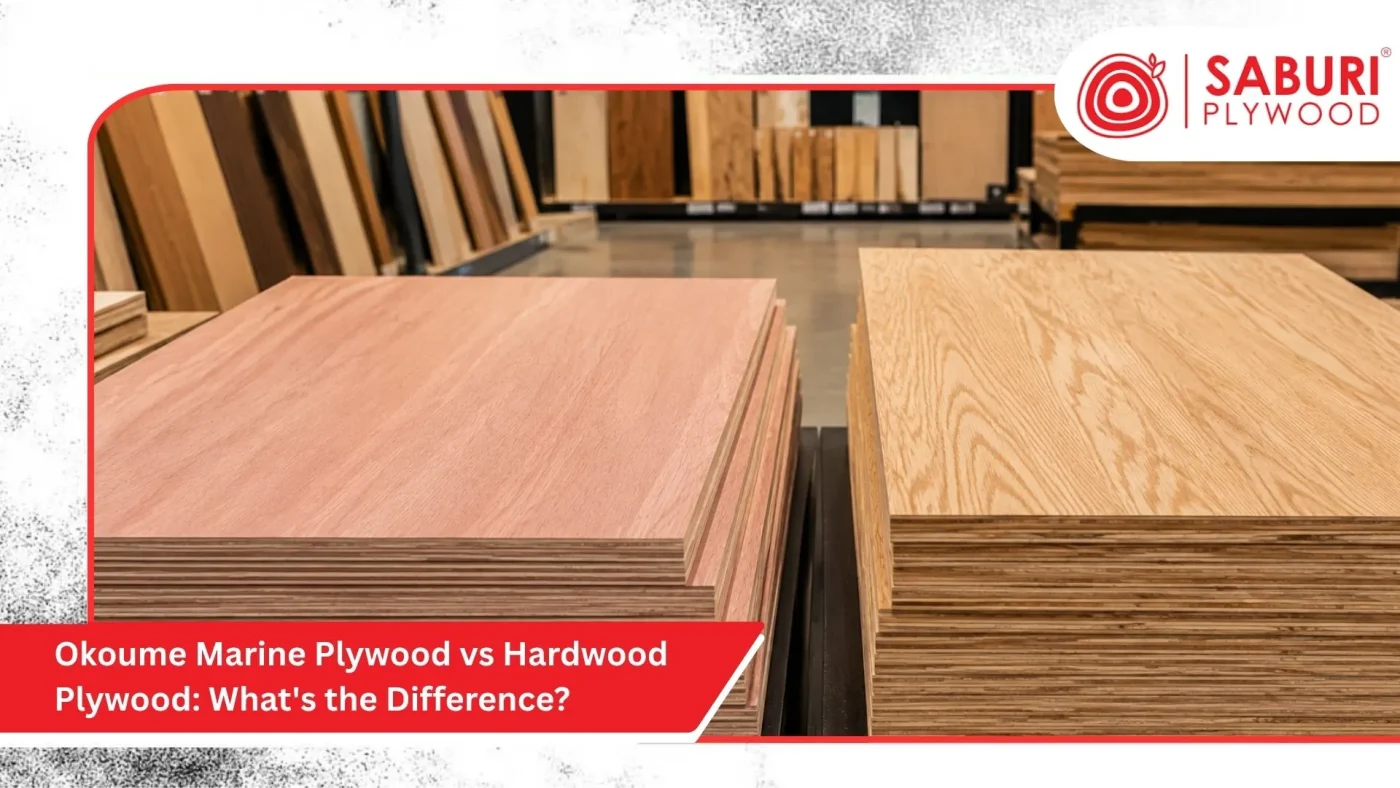

Anyone who has stood in front of a plywood dealer’s shelf, staring at ten sheets that all look more or less the same, knows the confusion that follows a simple question. Should you go for Okoume marine plywood or a regular hardwood plywood sheet? The two terms get used loosely in the market, often by dealers who are not entirely sure of the difference themselves. This blog breaks down what actually separates the two, so your next purchase is based on facts and not on whatever sounded more expensive at the counter.
What Is Okoume Marine Plywood
Okoume is a light coloured wood that comes from West and Central Africa, prized in the plywood industry for its fine, even grain and light weight. Okoume marine plywood usually features this wood as the face veneer, and in some constructions the wood runs right through the panel as well. Because Okoume is easy to peel into thin, even sheets and takes to resin bonding well, panels that use it are commonly associated with strong moisture resistance when paired with the right adhesive grade, which is why the wood has long been linked to marine and boat building applications internationally. In India, Okoume marine plywood usually refers to plywood that carries this same Okoume facing along with marine grade, boiling water proof certification, built for kitchens, bathrooms, and other water prone corners of a home.
What Is Hardwood Plywood
Hardwood plywood, on the other hand, is defined mainly by its core, not its face. This category includes plywood built with dense hardwood species such as Gurjan, known for superior density and long term stability. Hardwood plywood is the standard choice for structural work, load bearing furniture, and shuttering, where sheer strength matters more than a mirror finish. The core layers are cross bonded to resist warping, and the sheet as a whole carries more weight per square foot compared to lighter alternatives. If you are building a heavy wardrobe, a kitchen frame, or any furniture that will bear constant load, hardwood plywood is usually the safer bet.
Comparing Weight and Strength
This is where the real difference between Okoume marine plywood and hardwood plywood becomes clear. Okoume, being a lighter wood, produces a sheet that is easier to handle and transport, which carpenters appreciate on site. Hardwood plywood, with its denser core, is heavier but offers a higher weight bearing capacity, which is exactly why it dominates in structural applications. Neither is better in an absolute sense. The right pick depends entirely on what the panel needs to do once it is installed.
Comparing Water and Moisture Resistance
Both categories can be engineered for water resistance, but the reasons differ. Okoume marine plywood earns its water resistant reputation largely from the veneer’s compatibility with strong adhesives and its traditional use in marine grade, boiling water proof panels. Hardwood plywood earns its moisture resistance from a combination of core density and the bonding grade used, whether that is BWP, BWR, or MR. When comparing the two for a bathroom or kitchen project, always check the actual certification on the sheet rather than assuming the wood name alone guarantees performance.
Which One Should You Choose
For kitchen shutters, cabinet doors, and areas exposed to steam and splashes, Okoume marine plywood offers a smooth, paint ready finish along with dependable water resistance. For wardrobes, structural frames, and furniture that takes daily wear, hardwood plywood is the more practical choice because of its density and load bearing strength. Many homes end up using both, Okoume marine plywood for finished, visible surfaces, and hardwood plywood for the skeleton of the furniture that nobody sees but everyone relies on.
What Saburi Ply Brings to This Comparison
At Saburi Ply, our Saburi Gold range carries an Okume veneer facing along with IS 710 marine grade certification, giving it the smooth finish and water resistance that buyers look for in Okoume marine plywood. Alongside this, our Saburi Titanium Plus and Saburi Perennial ranges are built around Gurjan cores, and our Saburi Scout range uses a hardwood core, offering the density and strength expected from genuine hardwood plywood. Whether your project calls for the polished surface of Okoume marine plywood or the structural backbone of hardwood plywood, our range is manufactured with calibrated pressing and tested for fire resistance, boiling water resistance, and nail holding strength before it ever leaves our plants.
Making the Right Call for Your Project
The plywood you choose today becomes part of your home for decades, so it is worth taking a moment to match the material to the job. Okoume marine plywood works best where a smooth finish and moisture resistance are the priority. Hardwood plywood works best where strength and load bearing capacity come first. Understanding this one distinction will save you from both overpaying for a finish you did not need, and underpaying for strength you actually required.
Talk to Us Before You Decide
If you are still weighing Okoume marine plywood against hardwood plywood for your kitchen, wardrobe, or full home interior, get in touch with the Saburi Ply team. We will walk you through which range fits your specific space, so the plywood behind your walls works as hard as the design in front of them.
Leave a Comment