
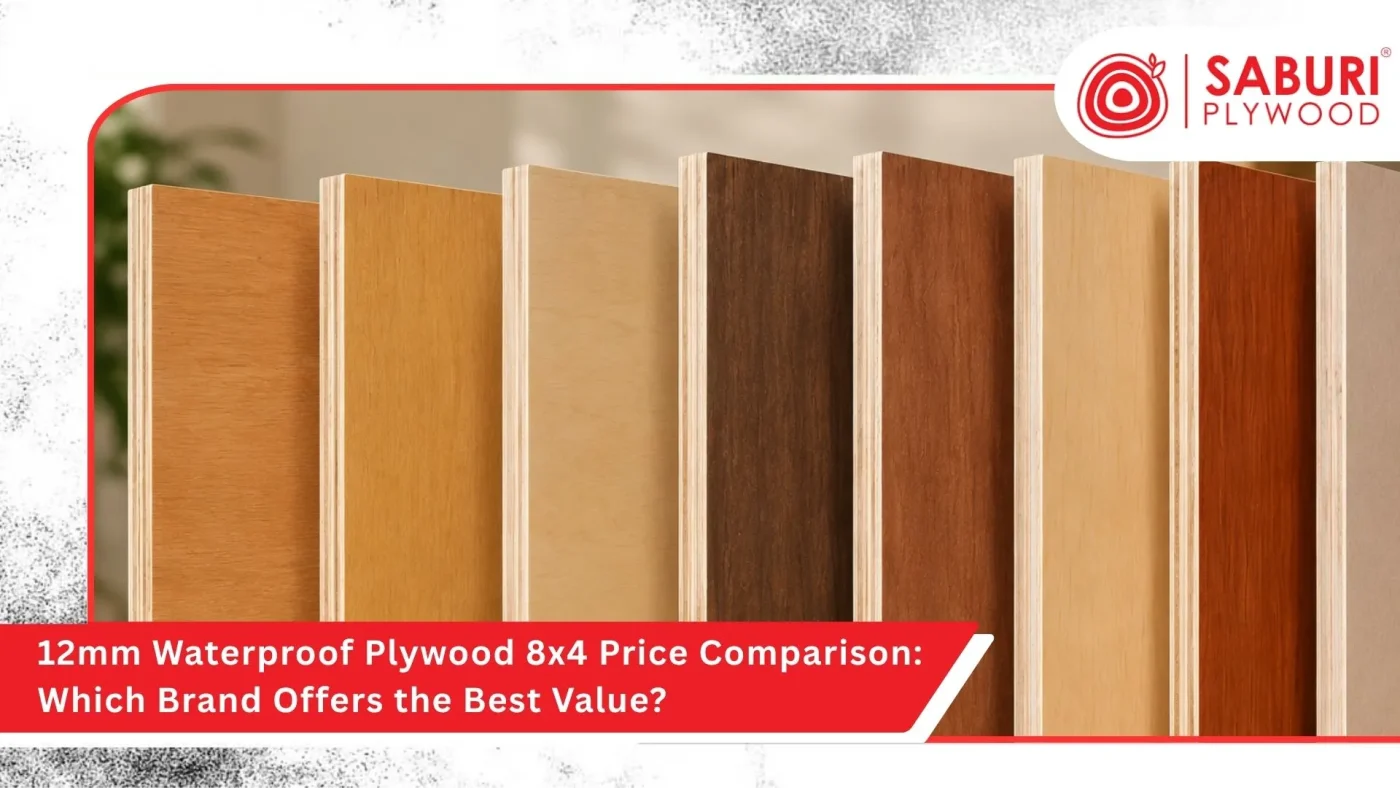

The 12mm waterproof plywood 8×4 price varies more than most buyers expect, and honestly, it’s meant to. Two sheets can carry the same “waterproof” label at the timber yard while sitting nowhere near each other in actual quality, because BWP, BWR, and marine grade all get marketed loosely as “waterproof plywood” even though they’re built to different standards.
Before comparing brands on price, it helps to know exactly what grade you’re paying for, since that single factor moves the number more than anything else on this list.
What decides how much a 12mm waterproof plywood 8×4 sheet actually costs?
Grade is the biggest lever. BWP-grade board, bonded with phenol formaldehyde resin under IS: 303, costs more than BWR grade because it survives repeated boiling-water tests that BWR doesn’t need to pass. Core wood matters next. Gurjan hardwood holds screws better and resists warping far longer than mixed or softwood cores, and that difference shows up directly in price.
Calibration, where the panel is machine-sanded to a uniform thickness across the whole sheet, adds a small premium but prevents the uneven lamination that uncalibrated boards are prone to. Add the manufacturer’s BIS licensing costs, freight, and 18% GST under HSN 4412, and you can see why the same “12mm waterproof plywood 8×4 price” quoted by two dealers on the same street can differ by a few hundred bucks or more.
What is BWP grade and how is it different from BWR?
BWP, or Boiling Waterproof, is the higher of the two commercial grades under IS: 303. It uses undiluted phenol formaldehyde resin and is built to resist delamination even after prolonged water exposure, which is why it’s the standard choice for kitchen sink cabinets and any furniture likely to face direct water contact.
BWR, or Boiling Water Resistant, uses a similar resin family but at lower concentration, and it’s rated for occasional splashes rather than sustained wet conditions. Marine plywood, governed by a separate standard, IS: 710, sits a step above both, built for near-constant water contact in applications like boat hulls and coastal construction.
How do different brands compare on value for 12mm waterproof plywood?
Century Ply, Greenply, and a handful of other national names dominate shelf space in most timber markets, each offering BWP-grade lines at broadly similar price points once you account for calibration and core quality.
Saburi Ply’s BWP-grade range, sold under its Scout and Gold product lines, is built with phenol formaldehyde adhesive and carries active BIS certification, manufactured entirely in-house across the company’s own plants in Kolkata rather than outsourced.
Every panel goes through an eight-point quality check and calibration before it leaves the factory, and the certification number printed on each sheet can be checked directly against the BIS database, so a buyer isn’t left taking a dealer’s word for what grade they’re actually getting. That verifiability, more than any single price point, is usually what separates good value from a cheap-looking quote that turns out to be BWR sold as BWP.
How does BWP compare with BWR and marine grade?
| Feature | BWR Plywood | BWP Plywood | Marine Plywood (IS: 710) |
| Governing standard | IS: 303 | IS: 303 | IS: 710 |
| Resin used | Phenol formaldehyde (diluted) | Phenol formaldehyde | Phenol formaldehyde (undiluted) |
| Water resistance | Moderate | Excellent | Superior |
| Kitchen use | Limited | Yes | Yes |
| Bathroom use | Not ideal | Yes | Yes |
What should you check before paying for 12mm waterproof plywood 8×4?
Look past the ISI mark to the CML number stamped on the panel edge. That’s the manufacturer’s actual BIS licence number, and the Bureau of Indian Standards portal lets you confirm it’s current before you pay for anything. Ask whether the sheet is calibrated, since an uncalibrated board can vary in thickness across the same panel. And always ask for the 12mm waterproof plywood 8×4 price in writing with GST shown separately. That way you’re comparing the same thing across dealers, not a quote that hides the tax against one that shows it.
For a deeper breakdown of which grade suits which room, Saburi Ply has published its own guide to choosing the right waterproof plywood grade, worth a read before you finalise an order.
Frequently Asked Questions
What is the difference between BWP and BWR plywood?
BWP uses undiluted phenol formaldehyde resin and survives prolonged water exposure. BWR uses a similar resin at lower concentration and suits occasional splashes rather than sustained wet conditions.
Is BWP plywood completely waterproof?
Not entirely. It resists boiling water and prolonged dampness far better than other grades, but constant submersion over years will eventually affect any wood-based panel, including BWP.
Which plywood is best for kitchens?
BWP grade is the standard recommendation for kitchen cabinets and sink units, since kitchens see regular water contact that BWR grade isn’t built to handle long-term.
How long does BWP plywood last?
A genuine, calibrated BWP sheet typically lasts 15 to 20 years in normal household use, though this depends heavily on core wood quality and how well it’s maintained.
Is BWP plywood termite resistant?
Not automatically. Termite resistance comes from chemical preservative treatment during manufacturing, not from the water-resistance grade, so check this separately when buying.
Leave a Comment